Bromma Parklycka – Real Estate Marketing Platform
Real-estate marketing site with a lead CRM and AI chat.
Visit the live project →- PROJECT TYPE
- Client work
- ROLE
- UX/UI, implementation & lead tracking
- MARKET
- Sweden
- INDUSTRY
- Real-estate marketing
- STACK
- Next.js · TypeScript · Tailwind CSS · PostgreSQL · Prisma · OpenAI · Vercel
- STATUS
- Live in production
Bromma Parklycka is built as a real estate marketing website that also functions as a lead system for the sales team. The goal was straightforward: present the project clearly, make it easy to register interest, and give the client a clean way to follow up on leads.
On the public side, visitors can browse the project, check availability, open documents, and use an AI chat for common questions. On the admin side, a lightweight CRM tracks leads, conversations, and statuses in one place, with export support for external workflows.
My work covered the digital part of the acquisition flow: property presentation, UX/UI, implementation, tracking, Meta campaigns, lead capture, and handoff to the people responsible for sales follow-up. It supported the sales process; it does not claim that I personally sold properties or that every lead became a buyer.
Key Features:
- Landing page built for conversion with a clear CTA (“Anmäl intresse”)
- Unit/availability table with quick access to PDFs and documents
- AI chat assistant (Swedish/English) for project questions
- Lead capture that stores inquiries + chat events
- Admin CRM: lead status tracking, search/filtering, conversation history, CSV export
- Email automation for confirmations + admin notifications
- Google Maps + Meta Pixel conversion tracking
- Microsoft Clarity heatmaps to spot UX friction and improve flows

The hero section is designed to do one job well: communicate the feel of the project fast and push users toward registering interest.
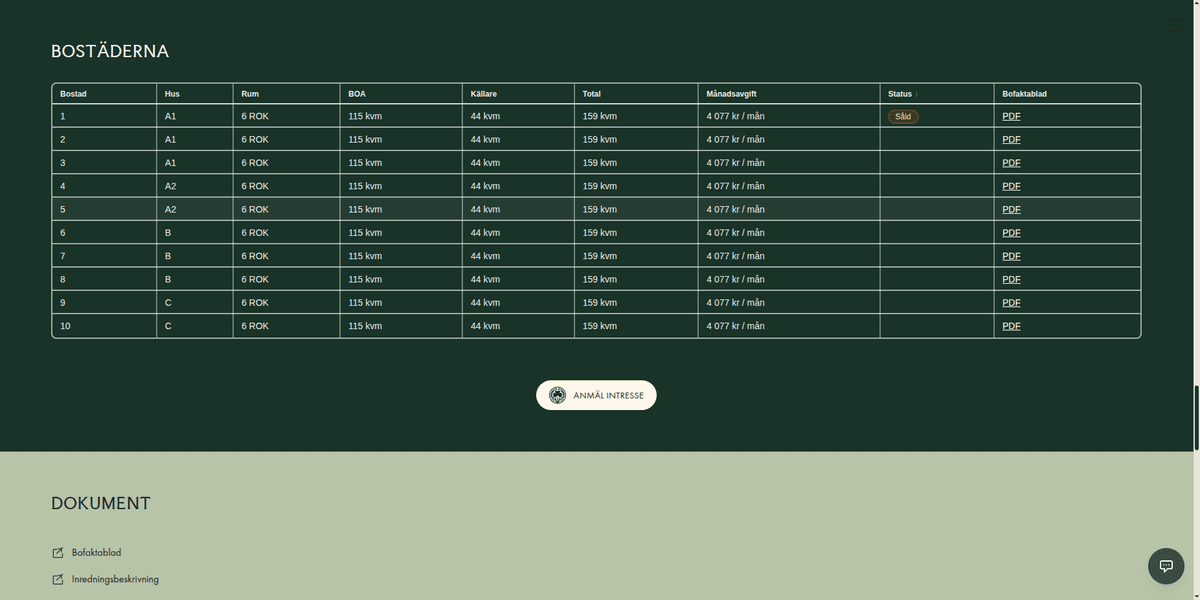
The “Bostäderna” section shows a clear availability table and links to key PDFs (floor plans / documents), so users don’t have to hunt for info.
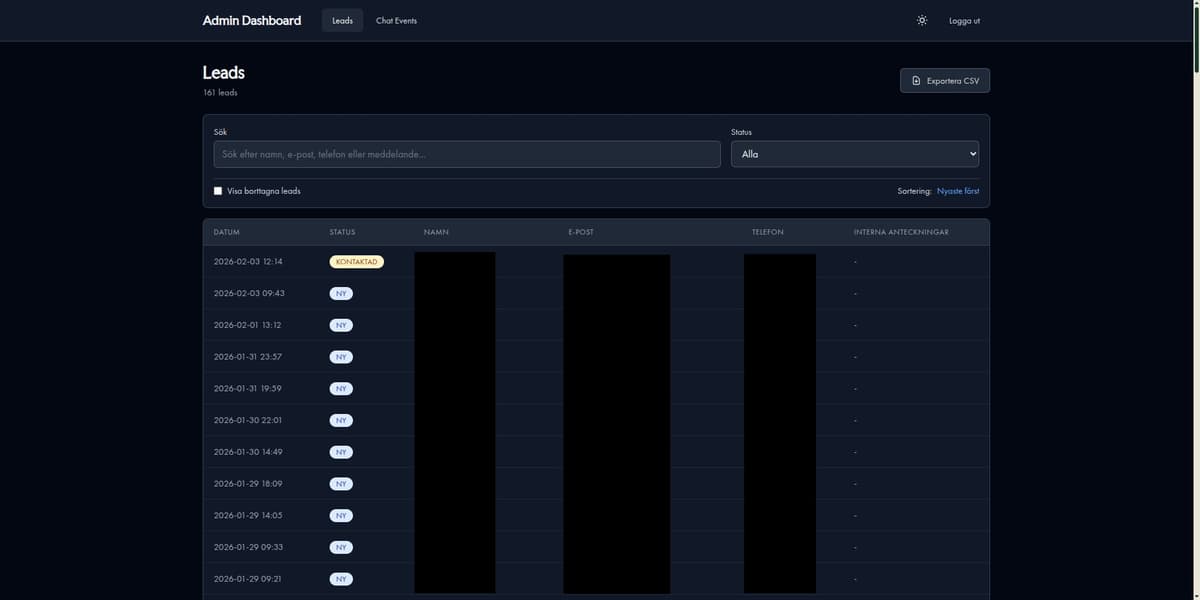
Admin dashboard for lead management: searchable lead list, status tracking, and quick CSV export for handoff to external CRM processes.
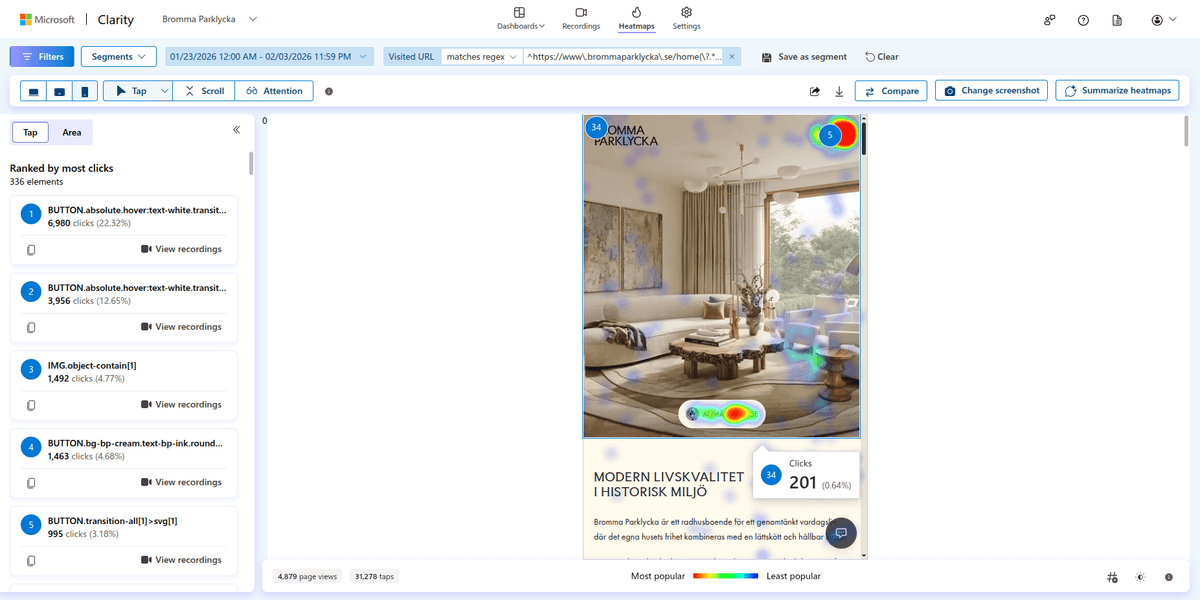
Microsoft Clarity was used to see what people actually click, how far they scroll, and where they get stuck, then to iterate on layout and CTAs based on real behavior.
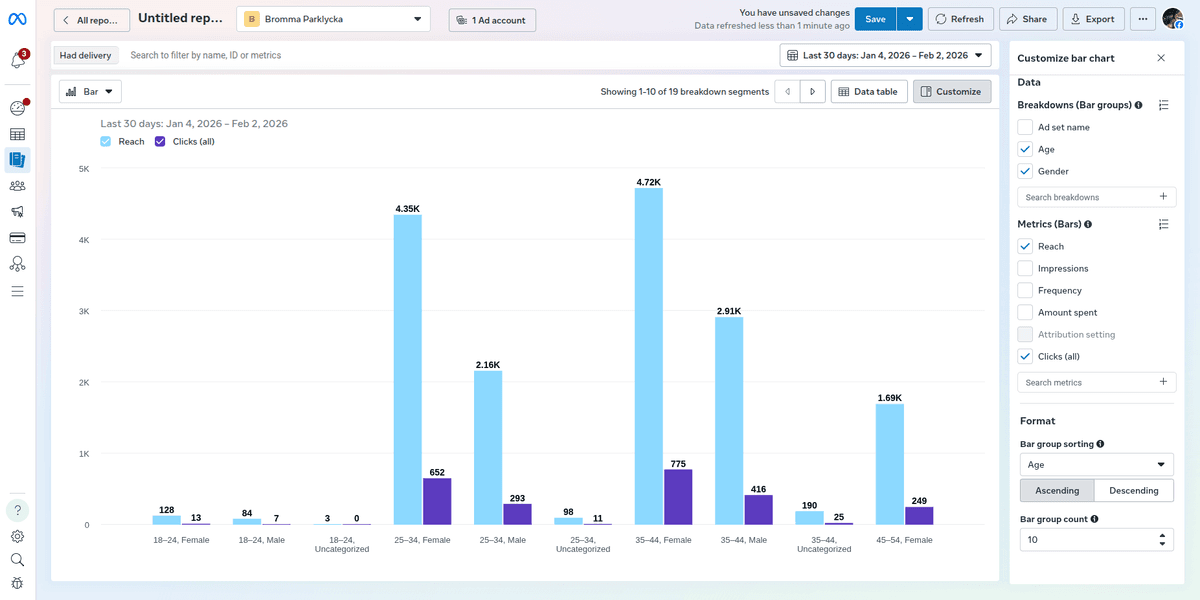
Meta ads reporting was used to track performance and audience breakdowns (reach/clicks by age and gender), which helped guide creative choices and landing-page improvements.
Technical Overview:
- Next.js 14 (App Router) + TypeScript
- Tailwind CSS with custom brand styling + dark mode
- PostgreSQL + Prisma (migrations + structured data models)
- Custom session auth using HMAC-signed cookies
- OpenAI chat integration with context retrieval + conversation tracking
- Upstash Redis for rate limiting / reliability
- Resend for transactional emails with branded templates
- Deployed on Vercel (production environment + configuration)
Beyond development, the work also covered photo editing, DNS setup for both domains, and email/domain records. Meta ad campaigns were run and results tracked through both Meta reporting and Clarity, which made it easier to improve the UX based on actual user behavior instead of guessing.